Anyone planning a backyard project will run into these two terms pretty quickly: hardscape and softscape. The terms sound technical at first, but the idea behind hardscape and softscape is fairly simple once it’s broken down.
Together, hardscape and softscape make up the full picture of what a landscape actually includes, and knowing the difference helps homeowners make smarter choices about where to spend a budget and how to prioritize a project.
What Counts as Hardscape?
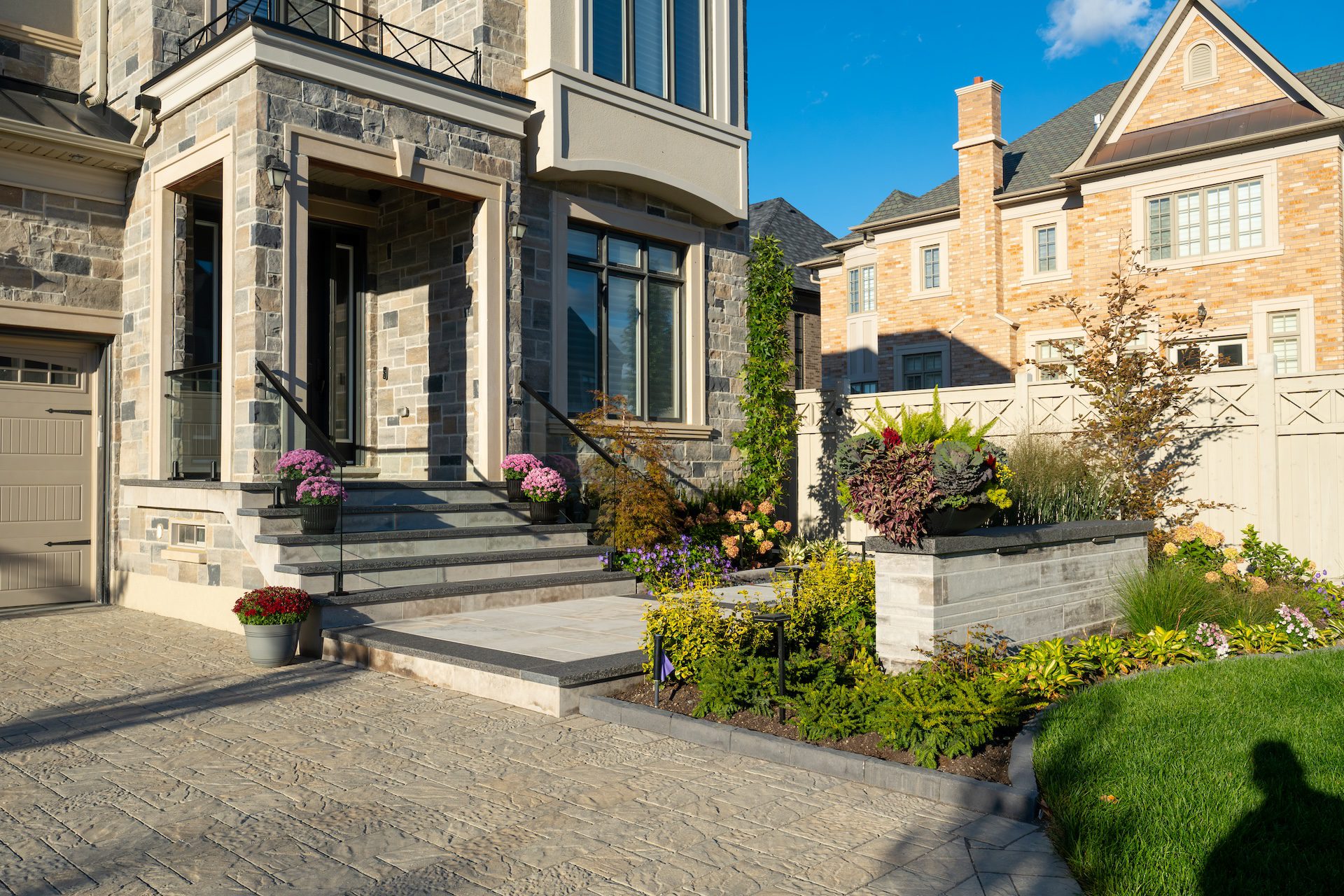
Hardscape refers to the solid, built structures in a landscape. Think concrete, stone, wood, and other hard materials that don’t grow or change with the seasons the way living plants do. Common hardscape features include:
- Custom decks and patios
- Retaining walls and stone walkways
- Outdoor kitchens and fireplaces
- Cabanas and pool houses
- Pools themselves, along with surrounding pool decks
These elements form the bones of a backyard. They tend to be the bigger investments, since construction, engineering, sometimes permits, and skilled labour all factor in, but hardscape is also what gives a space its structure and usable layout. Without hardscape, a yard has nowhere for people to actually sit, gather, or cook.
What Counts as Softscape?
Softscape covers the living, growing parts of a landscape. This includes lawns, garden beds, trees, shrubs, and the irrigation systems that keep everything healthy through the season. Softscape is what brings colour, texture, and a genuine sense of life to a yard that hardscape alone simply can’t provide on its own.
While softscape might seem like the easier half of the equation, it actually requires just as much careful planning as the structural side. Soil quality, drainage, sun exposure, and plant selection all affect how well a garden or lawn performs over time, especially through harsh Canadian winters and humid summers that can be tough on less hardy plant varieties.
Why the Balance Between the Two Matters
A backyard that leans too heavily on one side often feels off, even if it’s hard to put a finger on why. All hardscape with no greenery can feel stark, cold, and uninviting. All softscape with no structure can feel unfinished or hard to actually use for everyday living. The best results come from blending both in a way that complements the home’s architecture and the way the space gets lived in day to day.
This is part of why landscape design and build work best as one connected process rather than two separate contracts. A designer planning a custom deck also needs to think about how garden beds or lawn areas will frame it once it’s finished. Likewise, a softscape plan needs to account for any hardscape structures already in place or planned for a future phase of the project.
How This Plays Out in Real Projects
Picture a backyard with a custom luxury pool as the centrepiece. The pool deck, surrounding stonework, and any cabana nearby all fall under hardscape. The plantings around the pool, the lawn leading up to it, and any privacy hedges along the property line fall under softscape.
At Tersigni Landscape, hardscape design services are planned alongside the softscape from the start, so the stonework and the greenery complement each other instead of feeling like two separate projects stitched together after the fact.
Building a Backyard That Balances Both
Getting hardscape and softscape right takes real experience in both construction and horticulture, which isn’t always easy to find under one roof. At Tersigni Landscape, we bring both sides together as part of every project, so nothing gets designed in isolation from the rest of the yard or added on as an afterthought later. Contact us to talk through a plan that blends structure and greenery the right way for your specific space and lifestyle.